Don’t know what to do in Aveiro? We’ve got you covered. In this itinerary we’ll reveal the city’s main sights. If you prefer not to explore the city on your own, you can opt for a guided tour.
Aveiro is a charming city with its canals and colourful boats. But Aveiro is more than just natural landscapes.
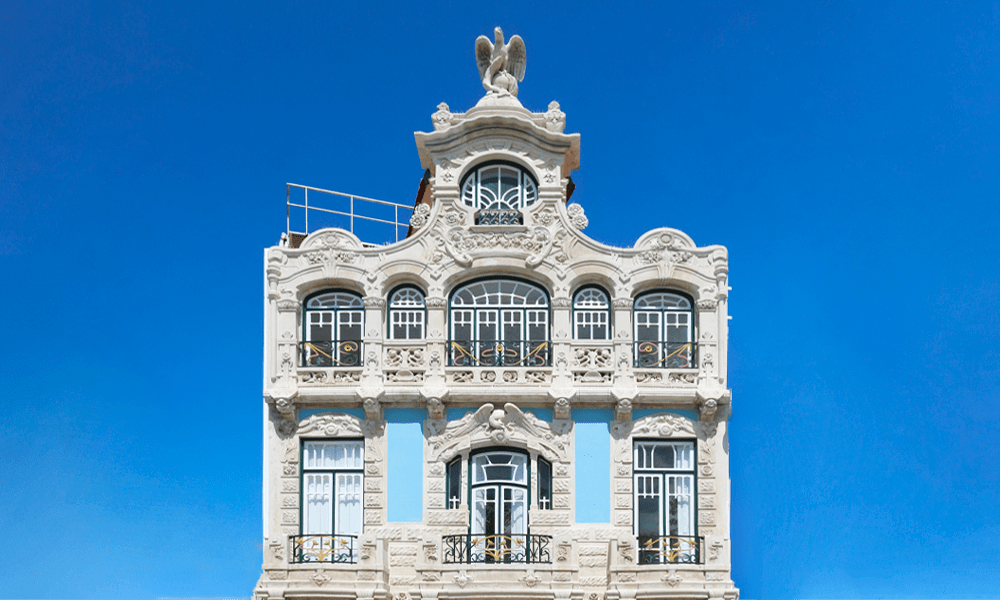
Aveiro is the city-museum of Portuguese Art Nouveau. With its richly crafted façades decorated with floral motifs and undulating lines, Aveiro invites you to explore. On foot, by bicycle or by boat, it’s easy to get caught up in the city’s calm and relaxing atmosphere.
Located a short distance from the city centre, the traditional salt pans offer an enchanting spectacle. Visiting the salt pans gives you an insight into the historical process of salt production. And of course, you can’t miss the famous Ovos Moles, a true symbol of Aveiro.
The outskirts of Aveiro are also worth a visit. The Costa Nova, with its colourful listed houses, and Praia da Barra, with its lighthouse, offer a unique experience. In Ílhavo, immerse yourself in the cod fishing tradition at the Maritime Museum and explore its rich local fishing heritage. At Praia da Vagueira you can watch Arte Xávega, a traditional fishing technique. Each destination around Aveiro adds a new dimension to your trip.
Want to know more? Come with us!
Aveiro
Aveiro offers a memorable experience for those who decide to explore it on foot.
Beira-mar neighbourhood
Aveiro was once a walled city between the 15th and 19th centuries. However the intra-walled area was small and it was necessary to expand outside the walls, thus giving rise to the so-called “Vila Nova”, now the Beira Mar neighbourhood.
Facing the central canal is the most emblematic building of the Art Nouveau movement in Aveiro: Museum of Art Nouveau. The building stands out for its stone façade, richly carved with floral and plant motifs combined with iron. A visit to the Art Nouveau Museum offers an excellent opportunity to better understand the distinctive characteristics of this artistic movement and delve into its impact on the architecture and design of the time.
Next to the Art Nouveau Museum, two other buildings are worth mentioning: the Agricultural Cooperative, with its tiled façade, and the City Museum. At the City Museum you can learn about the history of Aveiro, exploring the most important moments and protagonists that have marked the city. In all, Aveiro has 27 Art Nouveau buildings scattered around the city. You can explore them on your own or opt for a guided tour.
While you’re still in Bairro da Beira Mar, you can visit Largo do Rossio, a space that hosts various events. Additionalyy, just a short walk away is Praça do Peixe, where the locals gather to eat and enjoy the nightlife.
The St. Gonçalinho Chapel is nearby. This is where the Feast of St. Gonçalinho takes place, celebrated on January 10th, where promises are fulfilled by climbing the dome and throwing sweet cavacas from the chapel’s balcony. In the churchyard, hundreds of people gather to try to pick them up with shrimp fishing net, umbrellas or their bare hands.
Praça da República
When we think of Aveiro, it’s common to associate its growth with the Beira Mar area. However, the city’s original centre developed on the other side of the canal, where Praça da República is located.
In Praça da República you can see the Misericórdia Church (unfortunately it is closed most of the time), the Town Hall, Teatro Aveirense, Homem Christo High School and the Atlas building.
Museum of Aveiro/Santa Joana
It is housed in the former Convent of Jesus of the female Dominican Order.
The museum has collections of religious art, including Baroque painting, sculpture and carving, tiles, jewellery and paramentaria. Highlights include the Church of Jesus and the tomb of Princess Joana.
The famous Ovos Moles were created in this convent.
Across the street stands the Cathedral.
Cathedral
Aveiro Cathedral now occupies the site of the former Dominican Convent, founded in 1423. A fire in the 19th century destroyed almost the entire convent. All that remains is the church and the convent’s fence, now a cemetery, which was part of the old city wall.
Laços de Amizade Bridge and Fonte Nova Lake
The Ponte Laços de Amizade came about on the initiative of two students from the University of Aveiro with the aim of highlighting the relationships built in Aveiro, using fabric ties as a symbol of affection.
Located in the city centre, this bridge connects the Manuel Firmino Market and the Forum de Aveiro shopping centre. You can take photos and relax on one of the benches facing the Ria or, if you prefer, walk along the Côjo canal to Lago da Fonte Nova, a pleasant stroll, especially on sunny days.
Railway Station
The Railway Station stands out for the tile panels that line its walls, depicting figures such as the fisherman, the varina – women who sold fresh fish, carrying large baskets on their heads – and the tricana – young woman of the people who wore a characteristic outfit, with the shawl as a fundamental element – as well as landscapes from the region. Inside is the tourist office and a shop selling local products.
Salt pans
The salt pans are a must-visit for anyone who comes to Aveiro. Here, workers continue to extract salt in the traditional way. They can be Visitors are welcome all year round; however, the salt production season runs from May to September. all year round. Guided tours must be booked via the website https://salinasaveiro.com/visits/.
Moliceiro boat trip
The moliceiro boat trip is an alternative way of getting to know the city. There are several companies that organise this tour.
Aveiro Walkways
The Aveiro Walkways offer a pleasant and accessible route along the Ria de Aveiro. It is ideal for families, cyclists or simply those who want to relax and enjoy the natural beauty. The route has a total length of 7.25 kilometres, including 2.8 kilometres of elevated wooden walkways. The route starts at the Ribeira de Esgueira pier and ends in Vilarinho, next to the Rio Novo do Príncipe canal. For those who want a longer route, it is possible to start the walk at the St. Roque Canal, adding another 3 kilometres.
What to eat
Aveiro’s typical dishes closely connect to the Ria de Aveiro and the sea.
Eel is one of Aveiro’s great specialities and you can enjoy it as a stew or in a pickled sauce.
Petingas, fried or served in a pickled sauce, are another typical delicacy. Clams, mussels and cockles, as well as oysters, complete the local gastronomic offer and are a delicacy of the ria.
Ovos moles, a conventual sweet made from egg yolks and sugar, are the icon of Aveiro’s sweets.
Around Aveiro
Ílhavo
Located just 10 minutes from Aveiro, the municipality of Ílhavo offers several tourist attractions that are well worth a visit.
Costa Nova Beach and Barra Beach
Costa Nova beach, with its colourful colourful traditional wooden fishermen’s house, and Barra, with its imposing lighthouse, are perfect for those looking to relax and enjoy the sun. They are also ideal for practising water sports.
Ílhavo Maritime Museum
Ílhavo Maritime Museum preserves the memory of the men who took part in the “Faina Maior” cod fishing trips. A visit to this space offers the opportunity to learn about the history of cod fishing, a history made of salt, sea, blood and sweat! Addiconally, within the museum, visitors can also see the Cod Aquarium.
Santo André Museum Ship
The Santo André Museum Ship offers an authentic experience of life on board a cod fisherman. The visit offers a unique insight into the challenging conditions faced by the men who embarked on the cod fishery.
Vista Alegre Museum
The Vista Alegre Museum explains the history of the factory and the brand and the aesthetic evolution of porcelain production. You can also visit the Chapel and the Manual Painting Workshop of the Vista Alegre Factory, where you will have the opportunity to observe the delicate ceramic painting work, and the brand’s two shops.
Adjacent to the Museum, the Vista Alegre neighbourhood offers a trip back in time. This neighbourhood was born as a workers’ complex, created to house the porcelain factory workers. In addition to its yellow and white houses, the neighbourhood includes a number of social facilities, such as a crèche, a theatre and a cafeteria.
What to eat
In Ílhavo, cod is king. Inspired by the on-board cuisine of the fishermen, the region’s typical dishes make use of the cod’s faces, tongues, samos, bones and, of course, its loin. Some examples are “sopa de chora”, a savoury soup made with cod faces, crispy and delicious fried tongues and feijoada de samos, among other dishes.
You don’t have to worry about the food! Although Ílhavo’s typical dishes use parts of the cod, such as the tongue and the face, they are prepared in such a way as to offer a tasty and enjoyable experience. Don’t be impressed by the names; the real richness of these dishes lies in the delicious flavours they offer, without visitors having to face these parts of the fish directly.
Another culinary highlight is the Vale de Ílhavo Bread – padas and folar. This traditional bread is baked by hand in a wood-fired oven, which gives it a rustic and unique flavour. Due to its almost handmade manufacturing process, you won’t find it in the usual bakeries. However, you can find it in the Manuel Firmino Market, local supermarkets and some restaurants.
Vagos
The municipality of Vagos, located to the south of Aveiro, offers a number of tourist attractions that combine nature, culture and gastronomy.
Beaches
The region’s beaches, such as Praia da Vagueira and Praia do Labrego, are one of the main highlights.
At Praia da Vagueira you can watch Arte Xávega, an ancient form of fishing that is still practised today. In Arte Xávega, the fishermen set off from the beach in a crescent-shaped wooden boat, but leave a rope that remains attached to the land. They make a loop of more than 500 metres from the shore, release the net and return. The net is then pulled up with the help of tractors, filling the beach with fresh fish. It’s time to choose the fish!
Praia do Labrego is very popular with surfers because of its sea. Here you’ll find a water park, ideal for children.
If you’re looking for a quieter environment, Praia do Areão is perfect. It is protected by an extensive high dune ridge that separates the sand from the agricultural fields and the Mira Canal of the Ria de Aveiro. Visitors can access a large area of the beach via the wooden walkways installed throughout.
Mills and watermills
In addition to its beaches, Vagos is also known for its mills and watermills. In Aldeia do Boco you can visit two watermills, Azenha Ti Luísa and Azenha Barreto. Visiting these watermills gives visitors the opportunity to learn how a watermill works. The experience can include a trail through the Boco Valley, where you can visit other watermills and mills, help with the preparation and baking of broa mimosa, and/or enjoy lunch at Azenha Ti Luísa. The realisation of these activities and the price depend on the size of the group.
In Ouca, you can explore the Azenha Park, where you’ll find a vertical wheel watermill, available to visit by appointment. Nearby, you can also visit the mills of S. Romão (in ruins).
Casa Gandareza
Located in the village of Santo António, Casa Gandaresa is a landmark of the Vagos region’s cultural heritage. Closely linked to agricultural life, Gandaresa houses are organised around an inner courtyard to which various parts of the house lead, such as the barn, chicken coop, shed and corral. Their exterior façade features a combination of window-door and gate framed in stonework. Prior booking is required.
Museum of Play
The Museum of Play is located in the centre of Vagos. It is a space dedicated to the preservation and exhibition of antique and modern toys. The museum has a vast collection of toys ranging from rag dolls, miniature cars, board games to a miniature classroom.
Unlike many traditional museums, here visitors can play with many of the objects on display.
What to eat
The municipality’s gastronomy is another strong point, with typical dishes including the famous eel stew, pumpkin porridge, pão de cornos (horn bread) and broa mimosa.
Pão de cornos is a bread baked in a wood-fired oven and brushed with olive oil, in a crescent shape.
Pumpkin porridge is traditional dish made on the Day of the Faithful Departed, often served with roasted pork or grilled sardines. It has a creamy and orange texture.
Broa Mimosa is a rare delicacy, available only by order from the few old ladies who know the recipe. Without prior request, the broa can only be found in the parish of Soza during specific festivals, such as Senhora das Candeias and Santo Inácio, at the annual Pumpkin Fair, and once a month at the headquarters of the Pumpkin Flavours Brotherhood. It is a combination of wheat and corn flour, baked in a wood-fired oven, with an irresistible cinnamon aroma.